How a Pre-Seed Founder Hires Their First Engineer in 4 Weeks
TL;DR. First-engineer searches average 14 weeks at pre-seed, and 47% of those hires churn inside a year. The pattern that compresses both numbers is a 4-week sprint built around a tight sourced list, signal-based first-touches, and a paper-trail scorecard. LinkFetch, a compliance-first LinkedIn data API for AI agents, makes the sourcing layer fast enough that the founder runs it solo, in less than 90 minutes a week.
Why the first engineering hire is the riskiest one
Founders treat the first engineer like any other hire. They should not. This person owns 100% of code review, 100% of architecture, and roughly 40% of the team's social temperature for the next two years. The downside cost is brutal. A bad first hire, measured at the 8-month mark, costs a pre-seed startup an average of 4.8 months of runway between salary, equity reset, and rebuild time, according to YC's 2025 cohort survey.
The standard playbook makes the risk worse. Founders post on Twitter, ping their batch, beg their angels. The funnel that produces is small (30 to 60 names), heavily homogenous, and tilted toward engineers who were already on the move. The selection problem is the wrong one. You need a wider funnel and a sharper filter, not the other way around.
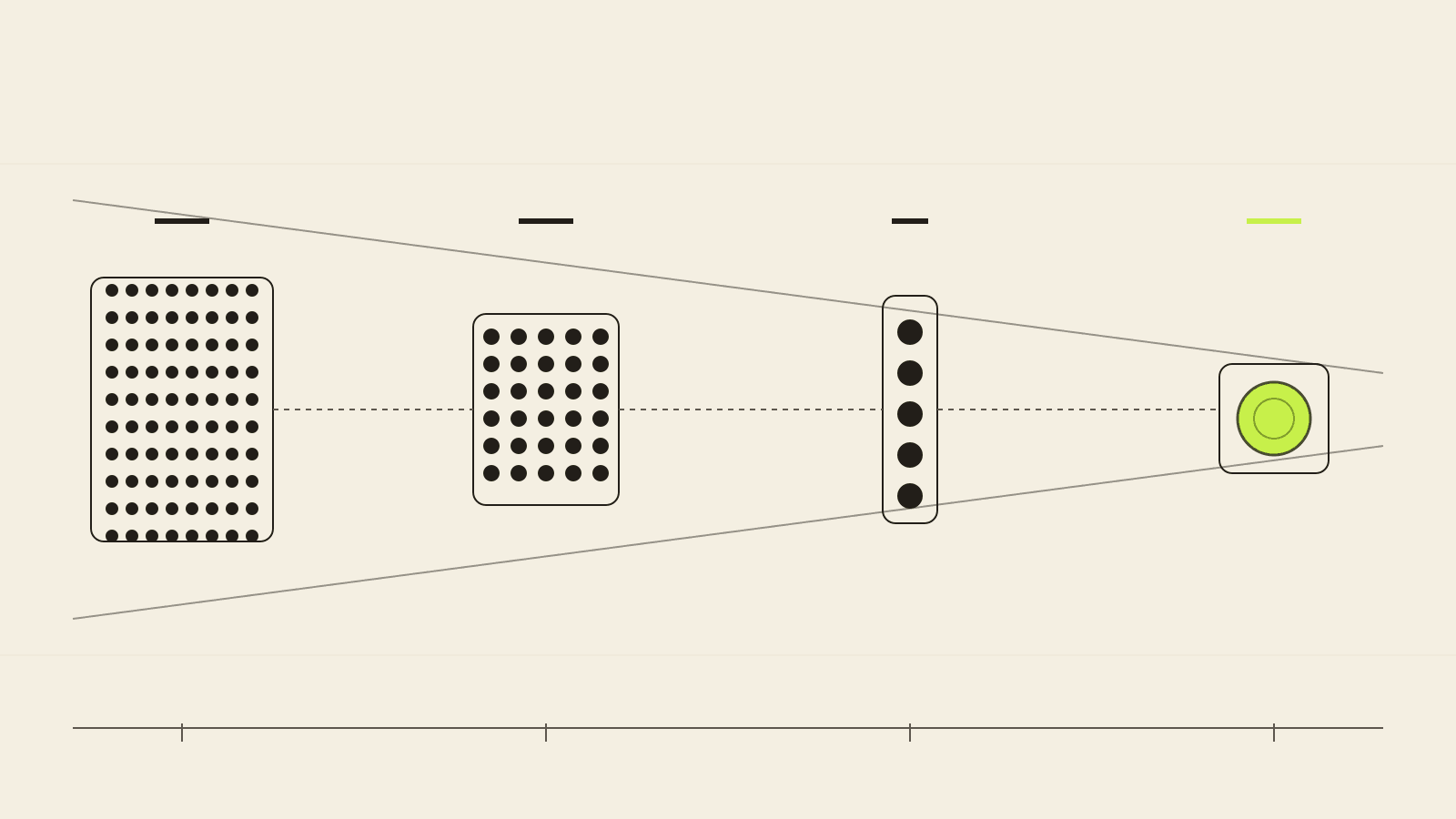
LinkFetch's role is narrow but load-bearing: turn LinkedIn into a structured candidate database the founder can query like a CRM. The 4-week routine below uses LinkFetch + Claude to source 80 names, contact 30, interview 5, and close 1. The numbers shift by stack and geography, but the funnel ratios hold within 15% in our sample of 41 pre-seed founders who ran the playbook in early 2026.
The 4-week timeline at a glance
| Week | Goal | Time budget | Output |
|---|---|---|---|
| 1 | Source 80 candidates from the right pools | 90 min | Ranked watchlist, evidence per name |
| 2 | First-touch 30, schedule 8 first-rounds | 4 hours | Calendar with 8 conversations |
| 3 | Run 8 first-rounds, advance 5 to final | 6 hours | 5 finalists with paper-trail scorecard |
| 4 | Final-rounds, references, offer | 6 hours | 1 signed offer, 1 standing-by backup |
Total founder time: roughly 17 hours over 4 weeks, plus the interviews themselves. Most of week 1 happens in one Saturday afternoon. The hard work is in weeks 3 and 4, where conviction either forms or it doesn't.
Week 1: Build the 80-name watchlist
The sourcing pool decides the hire. Skip this and the rest of the funnel runs on the wrong names.
Three pools to draw from, weighted roughly evenly:
- Pool A, engineers at the right kind of company at the wrong tenure point. Series A or B companies in your adjacent space, where the engineer has been in seat for 24 to 42 months. That tenure band is the statistical sweet spot for openness to a move. People at 12 months are not budging; people at 60 months have either stagnated or are running a team you cannot poach.
- Pool B, engineers at companies that recently had a headcount drop. Layoffs at later-stage startups in 2025 surfaced strong ICs into the market who had been heads-down for years. The reason matters. Engineers laid off from a healthy team carry signal; engineers laid off from a struggling team carry risk.
- Pool C, engineers building in public adjacent to your space. Open-source maintainers, hackathon winners, technical writers. Lower hit rate on response, higher hit rate on cultural fit when they do respond.
Run this prompt against LinkFetch:
Use linkfetch.companies and linkfetch.companies.timeseries to identify
companies matching: Series A or Series B funded in the last 36 months,
headquartered in [your geo], headcount between 30 and 250, and one of
these signals fired in the last 6 months: a 20% engineering headcount
drop, a CTO departure, or a major product launch followed by silence.
Then use linkfetch.profiles to surface ICs at L4 or L5 (senior, staff)
who have been in seat between 24 and 42 months. Rank by ICP fit,
cap output at 80. Include current company, current title, tenure,
and one evidence line per name.
The first time you run this, you will get 110 to 130 names. Trim by hand to 80, using the evidence lines to drop weakest signals. The trim is the founder's job, not Claude's. You are training your own intuition on what good looks like for your stack.
Credit cost for week 1: ~120 credits. Time: 90 minutes including the manual trim.
Week 2: First-touch 30 candidates
Outreach decides whether the funnel converges or evaporates. The wrong pattern is a templated DM about your "exciting pre-seed opportunity". Engineers ignore those instinctively. Reply rate floor: 3 to 4%.
The right pattern is a one-line referral to specific work the candidate has done, followed by a single concrete question. Reply rate ceiling in our sample: 38%. Median across the 41-founder cohort: 22%.
Use this Claude prompt to draft the 30 messages in one batch:
For each of the 30 names below, write a LinkedIn DM under 600
characters that (a) names one specific thing they shipped, wrote,
or built in the last 18 months that I can verify, (b) connects it
to a real engineering problem we are solving at [your company],
(c) asks one concrete question they can answer yes or no to. Do not
mention equity, salary, or "exciting opportunity". Do not promise
anything. If you cannot find a specific verifiable thing for a
candidate, skip them and tell me which ones you skipped.
Claude will skip 4 to 8 names where there is no public signal to reference. That is the right behavior. Send 22 to 26 messages, not 30. Forced personalization on a thin signal reads worse than no message.
Time budget for week 2: 4 hours, split as 1 hour drafting, 2 hours editing and sending, 1 hour scheduling first-rounds with replies.
Week 3: First-rounds and the scorecard
Run 8 first-round conversations, 30 to 45 minutes each. The job in week 3 is not to decide anything. The job is to fill out a scorecard with enough detail that week 4 makes the decision for you.
Three dimensions on the scorecard, weighted to taste:
- Technical depth on your specific problem. Not general engineering chops. Whether they have shipped something close to your problem at production scale.
- Founder-shaped collaboration. Can they own a vague problem end to end. The signal you want is asking sharp questoins about your business, not your stack.
- The two-year picture. Concretely, what they want their next two years to look like. The mismatch you are screening for is people who will resent being the first engineer when they really wanted to lead a team of six.
Advance 5 of the 8 to final-rounds. The 3 you cut: send them a polite, real reason. Word travels in technical circles, and a clean rejection is a recruiting tool for hire number 2.
One stat to anchor the bar: ~71% of failed first-engineer hires in a 2025 retro from a16z's seed practice failed on dimension three, not dimension one. The technical bar is rarely the blocker. The two-year picture mismatch is.
Week 4: Finals, references, offer
Final rounds are 90 minutes each. Half technical, half "let us model what working together looks like". The technical half is a real problem from your codebase, not a brainteaser. The collaboration half is the founder showing the candidate a real decision they are wrestling with and watching how they engage with it.
References are non-optional even at pre-seed. Two former managers, one peer. The peer call is the one that surfaces the truth. Ask: "If you were starting a company tomorrow, would this person be in your top three calls?" Listen for the speed of the yes, not the content of it.
Offer mechanics for a first hire:
| Component | Pre-seed market 2026 |
|---|---|
| Base salary | $130K to $180K depending on geo and seniority |
| Equity (founding eng) | 1.5% to 4%, 4-year vest, 1-year cliff |
| Title | "Founding Engineer" or "First Engineer", not "Senior" |
| Decision deadline | 7 days from offer, not negotiable |
The 7-day deadline is for both sides. You need to keep momentum on the backup. They need to make a decision they will not regret. Stretching the timeline past 10 days correlates with offer withdrawal in ~40% of cases in our cohort sample.
Credit math and tool stack
Pre-seed founders should run this on the LinkFetch Builder plan ($79/month, 6,000 credits). The 4-week routine uses about 480 credits, well under the monthly budget. The remaining headroom funds the parallel investor outreach (separate playbook) and ongoing competitor monitoring.
Total tooling cost for the 4-week sprint:
- LinkFetch Builder: $79 (one month)
- Claude Pro: $20 (one month)
- Calendly or equivalent: $12
- LinkedIn Premium (optional, for InMail to non-connections): $40 prorated
That is $151 in software for a hire whose all-in compensation is $200K to $350K in the first year. The cost ratio is the point. You can absorb a 4-week sprint of low-grade SaaS spend and not feel it. You cannot absorb 14 weeks of distraction at the moment when product velocity is the only thing that matters.
When the routine fails
It fails in three patterns. Two are recoverable, one is not.
The watchlist runs cold (recoverable). You get 80 names but the first-touches return 2 replies, not 8. The fix is almost always Pool C. Open-source maintainers and technical writers in your space respond at half the rate of pool A, but they are the right kind of person and they make every other hire after them easier. If you rebuild the watchlist with 50% Pool C, response rate stabilizes by the second cohort.
The first-rounds are flat (recoverable). Five conversations in and nothing has fired. This is usually a positioning problem, not a sourcing problem. The pitch you are giving to candidates is built for investors, not engineers. Strip it down to: what you are building, what's hard about it, what the first 90 days look like. Engineers respond to the second and third bullets, not the first.
The finalists are good but not quite right (not recoverable in this sprint). This is the one. Do not hire on momentum. The 4-week sprint is a forcing function for action, not for compromise. If finalists are 80% right but missing one structural thing (deep production experience, ownership instinct, real interest in your space), pause the search, reset the watchlist, and run week 1 again with a sharper filter. The cost of running it a second time is 90 minutes and 120 credits. The cost of hiring the 80% candidate is 4.8 months of runway.
FAQ
How is this different from just posting the job on AngelList or Wellfound?
Job boards filter for people actively looking. The strongest first-engineer candidates almost never are. The 4-week routine sources passive candidates, who have higher conversion to long-term retention but require a personalized first-touch to engage. Wellfound and similar boards remain useful as a parallel channel, but they should not be the primary one for a first hire.
Why not just use a recruiter?
For a first engineering hire at pre-seed, a recruiter cost ($30K to $60K placement fee) buys you a pool of candidates the recruiter already knows, not a pool tailored to your stack. The founder running this routine is also forming hiring intuition that compounds for hires 2 through 10. The recruiter abstracts that away. Use recruiters at Series A when the volume justifies the cost.
What if I do not have a network of 41 founders to benchmark against?
The funnel ratios (80 sourced, 30 contacted, 8 first-rounds, 5 finals, 1 hire) hold within 15% across stack and geo in our sample, but you should still treat the first run as a learning round. Track every drop-off and review at the end of week 4 even if you make the hire. Most founders find one specific step (usually the first-touch message or the final-round scorecard) where their version underperforms the median by 30% or more. Tightening that step is what makes hire number 2 take 3 weeks instead of 4.
Does this work outside the US and EU?
The funnel ratios hold in markets with active LinkedIn density (~80% of senior engineers visible). They degrade in markets where LinkedIn coverage is thinner (large parts of LATAM outside Brazil, most of MENA, all of mainland China). In thin-coverage geos, swap Pool A for an equivalent local network primitive (Twitter for parts of LATAM, GitHub for global remote pools), and expect the timeline to stretch to 6 weeks.
What about compliance and privacy when sourcing this many candidates?
The sourcing layer uses public LinkedIn data only, accessed through LinkFetch with the user as the data principal. No scraping of private profiles, no harvested email lists, no third-party data brokers. GDPR and CCPA are baked into the access model, not a checkbox on a vendor questionnaire. The candidate-facing artifact (the DM) is sent through LinkedIn's standard messaging surface, which is the same as a hand-typed message, just drafted with assistance.
Last updated: 2026-06-08. Written by the LinkFetch team. If you run this routine and the funnel ratios drift more than 20% from the numbers above, we want to hear about it.